PCB Assembly

PCB Assembly

PCB Assembly (PCBA)
PCB Assembly (PCBA, Printed Circuit Board Assembly) is the core electronic manufacturing process of mounting and soldering electronic components onto a bare PCB to form a functional circuit module. It is mainly divided into three categories: SMT Surface Mount Technology, THT Through-Hole Technology, and Hybrid Technology.

I. Core Process Types and Application ScenariosII. SMT Surface Mount Process Flow (Mainstream Automation)

Process

English

Applicable Components

Features

Typical Applications

Surface Mount Technology

SMT

Chip resistors/capacitors, ICs, BGA, diodes

Small size, high density, high automation

Mobile phones, computers, consumer electronics

Through-Hole Technology

THT

Connectors, electrolytic capacitors, transformers, high-power devices

High mechanical strength, suitable for high current/high power

Power supplies, industrial control, home appliances

Hybrid Technology

SMT+THT

Both SMT and through-hole components on the board

Balances high density and strong connection

Most modern electronic products


II. SMT Surface Mount Process Flow (Mainstream Automation)
1. Solder Paste Printing

•  Precisely print solder paste onto PCB pads using a stencil, with a thickness controlled at 0.1–0.15mm.
•  Key point: SPI (Solder Paste Inspection) to real-time monitor thickness, offset, insufficient solder, and excessive solder.
2. Component Placement

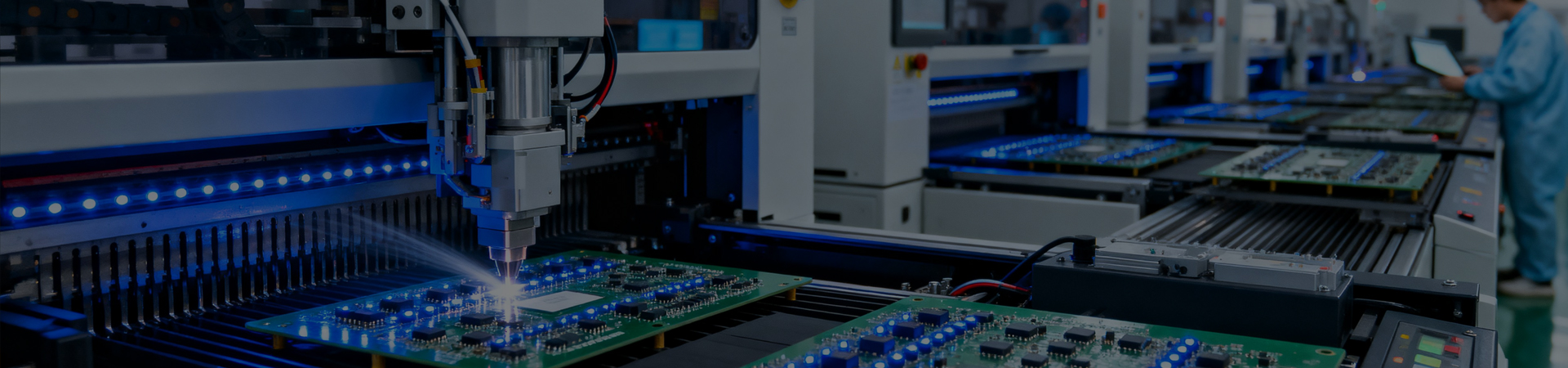
The placement machine picks up and places components according to the coordinate file, with an accuracy of ≤±0.05mm for 0201 components.
•  Equipment: High-speed placement machine (for general components) + multi-function placement machine (for special-shaped/precision ICs).
3. Reflow Soldering

•  The PCB goes through four stages in the reflow oven: preheating → soaking → reflow → cooling.
•   Lead-free process: Peak temperature 235–245℃, duration 40–90 seconds.
•  Goal: Form reliable solder joints and avoid cold solder, poor solder joints, and bridging (short circuits).
4. Inspection and Rework

•  AOI (Automatic Optical Inspection): Scan solder joints and component positions to identify defects.
•  Rework: Process defective solder joints/components with a hot air gun or rework station.

III. THT Through-Hole Assembly Process (For Through-Hole Components Only)
1. Component Preprocessing

•  Pin shaping and cutting to adapt to PCB hole positions and spacing.
2. Component Insertion
○ Manually or automatically insert pins into through holes; polar components must be aligned with the silk screen.
3. Wave Soldering

•  The PCB passes through a molten solder wave (260–270℃), and the pins form connections with the pads.
•  Soldering time: 3–5 seconds per side; heat-sensitive components need to be protected.
4. Pin Cutting and Cleaning

•  Cut off excess pins and clean flux residues (especially for high-frequency circuits).

IV. Hybrid Process (SMT+THT) Flow (Most Commonly Used)
1. First complete SMT placement + reflow soldering (process all SMT components).
2. Then perform THT insertion + wave soldering/selective soldering (process through-hole components).
3. Selective soldering: Only locally heat the through-hole pins to protect the already mounted SMT components.

V. Overall PCBA Process Overview (From Bare Board to Finished Product)
1. Incoming Quality Control (IQC): Verify the model, parameters, and appearance of PCBs and components.
2. SMT Placement: Printing → Placement → Reflow Soldering → AOI.
3. THT Insertion: Preprocessing → Insertion → Wave Soldering → Pin Cutting.
4. Cleaning (optional): Remove flux, solder balls, and other residues.
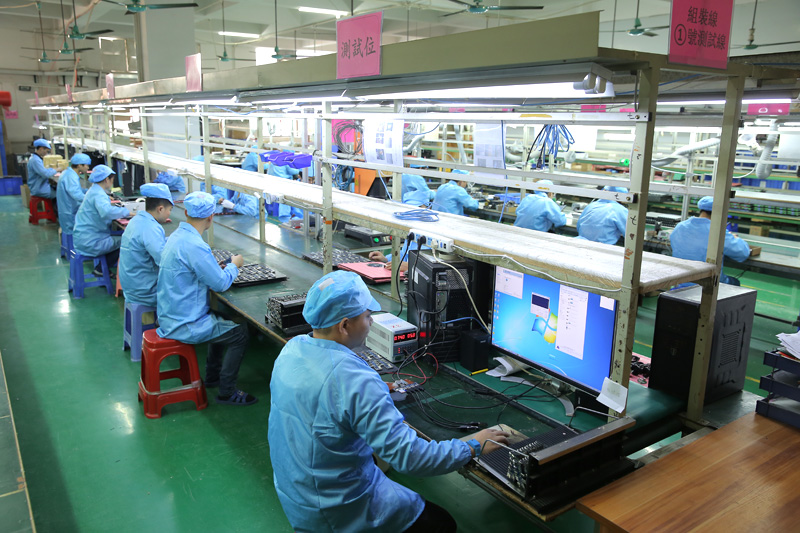
5. Testing Links

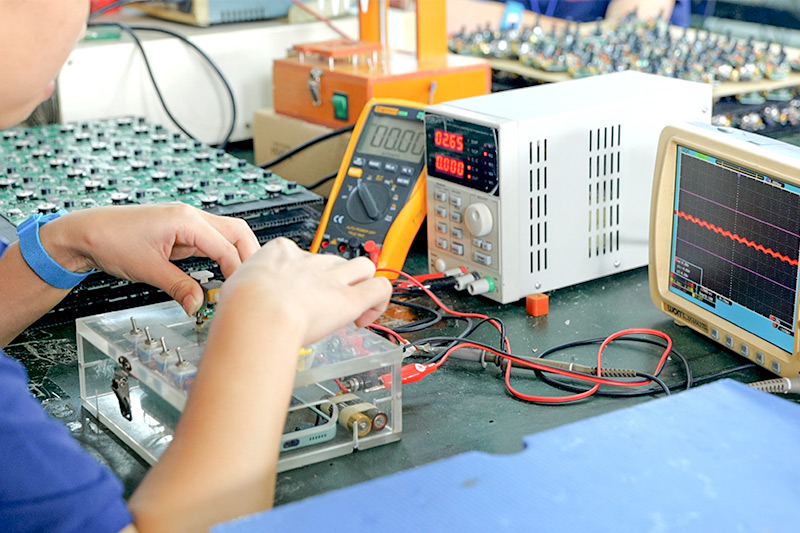
•  ICT (In-Circuit Test): Detect open circuits, short circuits, wrong/missing/reversed components.
•  FCT (Functional Test): Simulate actual working conditions to verify circuit functions.
•  Aging Test: Operate under high temperature/high load to screen early failures.
6. Assembly and Packaging: Install enclosures and heat sinks, and package for shipment with anti-static packaging.


VI. Key Quality Control Points
• Solder paste thickness, printing offset, and placement accuracy.
• Temperature curve and time of reflow soldering/wave soldering.
• Defect detection rate of AOI, ICT, and FCT.
• Electrostatic Protection (ESD) and soldering reliability.